Mental Health and Wellness Services
Understanding Deep TMS
Despite the term “deep,” this therapy does not require surgery, implanted medical devices, or anesthesia to impact brain activity. It’s a completely noninvasive option for treating OCD, depressive symptoms, and other mental health conditions.
dTMS vs rTMS: What’s the Difference?
For that reason, dTMS is usually the more effective treatment for severe mental health disorders. For example, while both treatments are approved for Major Depressive Disorder (MDD), only deep brain stimulation therapies are approved for smoking cessation and OCD treatment. In clinical trials, patients who tried dTMS were nearly 150% more likely to achieve remission for depression symptoms compared to the control group.
dTMS Therapy For:
dTMS specifically targets brain structures associated with mood regulation, providing an FDA-cleared, medication-free treatment for:
- Major Depressive Disorder (MDD)
- Treatment-Resistant Depression (TRD)
- Anxious Depression
- Obsessive-Compulsive Disorder (OCD)
- Smoking Addiction

dTMS Benefits

Effective for major depression & more
Whether trying to treat depression effectively or address other mental health conditions, dTMS goes far beyond other treatments. Its ability to reach deeper and wider areas of the brain makes it a powerful option for treatment-resistant disorders.

Noninvasive & drug-free
Like other TMS treatments, dTMS does not require anesthesia, surgery, or implanted devices. Instead, it’s completely noninvasive and medication-free.

Mild side effects
The side effects of dTMS are generally mild, mostly limited to a temporary tapping sensation, scalp discomfort, or headaches during or after sessions. Luckily, you’ll experience none of the systemic effects associated with medications.

Broader brain reach
Using a specialized H-coil helmet, dTMS stimulates deeper and wider areas of the brain than standard rTMS, allowing it to target structures involved in mood, habit, and compulsive behaviors more precisely.
What To Expect From dTMS Treatment Sessions
1. Initial Consultation & Psychological Testing
The first step toward symptom relief is reviewing your medical history, current disorders, prior treatments, and overall goals. If you don’t already have a formal diagnosis for conditions dTMS is FDA-approved to treat, our psychological testing services can assist.
2. Safety Assessment & Treatment Planning
3. dTMS Sessions Begin
4. Ongoing Progress Monitoring
Get Started Today!
Whether you’re struggling with major depression, OCD, or another mental health condition mentioned above, dTMS is a noninvasive way to reduce symptoms long-term. Reach out to FPSCA today and our expert team, including our nurse practitioner, is here to provide a fully personalized approach.
dTMS: Frequently Asked Questions
Is dTMS safe?
Do dTMS treatments hurt?
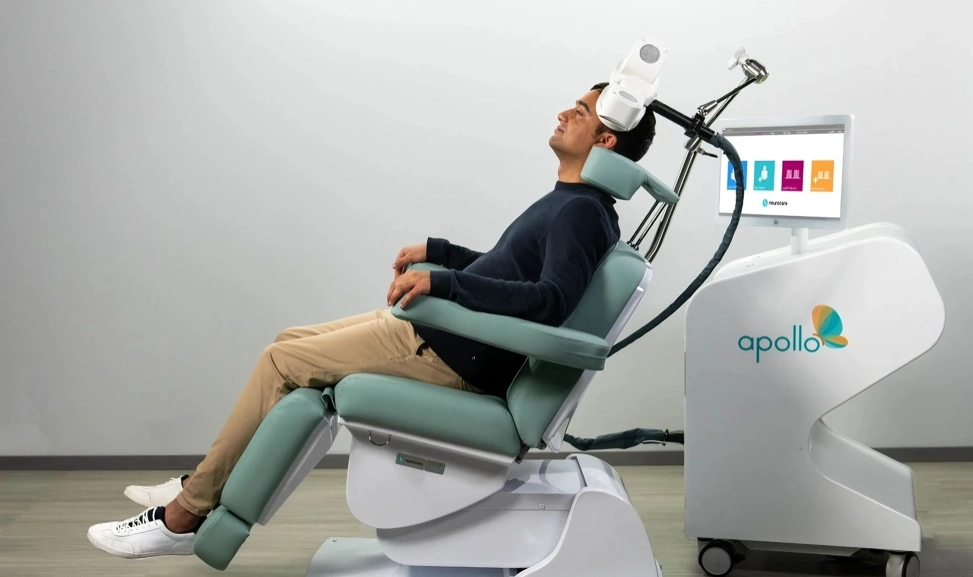
Do dTMS sessions use Apollo TMS machines?
Often, yes, though they also use a special H-coil to achieve deeper stimulation. Read about the Apollo TMS therapy system.
How long does a typical session take?
Sessions generally last 20 to 40 minutes, depending on your personalized treatment plan.
What are the side effects of dTMS treatment?
- Mild tapping or tingling at the treatment site
- Temporary scalp sensitivity
- Occasional mild headache
These mild effects are short-lived and typically resolve quickly.
How soon will I notice results?
How long do results from dTMS plans last?
Research has shown that roughly two-thirds of patients maintained the effects of TMS therapy for 6–12 months following treatment. However, as with any treatment, individual results may vary. We can always recommend periodic maintenance sessions to preserve long-term gains.
Can my medications be integrated into my dTMS treatment?
Is TMS covered by insurance?
Who is a good candidate for dTMS?
- Implanted electronic or metal devices near the head
- A history of seizures (evaluated case-by-case)
- Certain neurological conditions
Your clinician can help you determine if dTMS treatment is right for you.
Can I drive after a TMS session?
Related Services

Psychotherapy
Learn more


Neurofeedback
Learn more

Psychological Testing
Learn more

Lifestyle Med Spa
Learn more