Mental Health and Wellness Services
How Does TMS Therapy Work?
Did you know that there are a number of mental health conditions that have been linked to abnormal brainwave patterns, sometimes referred to as brain arrhythmia? Repetitive TMS (rTMS) is developed to solve this problem by providing magnetic pulses to the brain directly through an electromagnetic coil. These pulses go through the skull and stimulate nerve cells involved in emotion and cognition.
TMS differs from other treatments, such as vagus nerve stimulation (VNS) or electroconvulsive therapy, because it does not involve surgery, implanted devices or anaesthesia. It is therefore a viable non-invasive option for treating a variety of symptoms.

Standard Transcranial Magnetic Stimulation (TMS)
Standard TMS involves placing a Figure-8 coil over specific brain regions such as the primary motor cortex. The coil delivers controlled magnetic pulses that help adjust brain activity and support improved mood regulation. It is FDA-approved for treating major depression, OCD, migraine headaches, and smoking cessation.

Deep Transcranial Magnetic Stimulation (dTMS)
Deep TMS utilizes an H-coil system that can reach deeper into the brain than conventional TMS, often more than three times deeper. This makes it an option for people with more severe depressive symptoms or complex psychiatric conditions. We do not currently offer dTMS treatments because of cost.

About The Apollo TMS Device
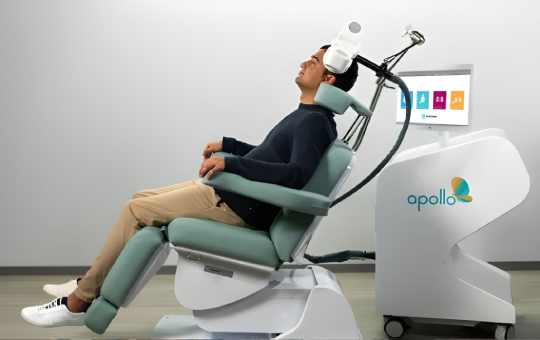
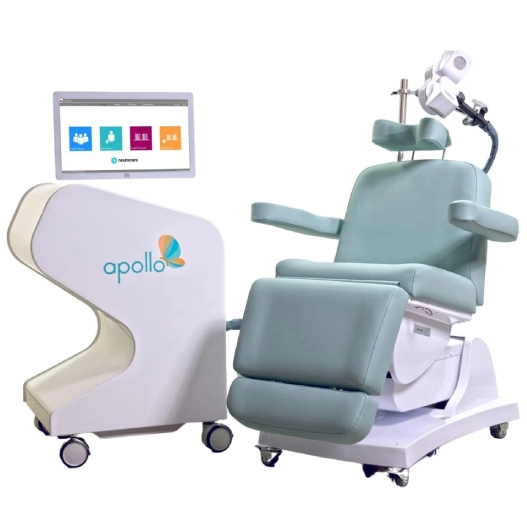
At Family Psychological Services provides treatment with our in-house Apollo TMS equipment to those seeking relief from depression, OCD, and related conditions. The system consists of a comfortable chair, standard coil, and advanced software technology for noninvasive sessions lasting 20 to 40 minutes.

Treat Depression & Other Mental Health Conditions
TMS is FDA-approved to treat:
- Major Depressive Disorder (MDD)
- Treatment-Resistant Depression (TRD)
- Obsessive Compulsive Disorder (OCD)
- Generalized Anxiety Disorder
- Migraines
- Smoking Cessation
Personalized repetitive transcranial magnetic stimulation (prTMS®) may also be used to support symptom relief for conditions such as bipolar disorder, autism spectrum disorder (ASD), ADHD, PTSD, and sleep-related disorders.
Studies Show Promise For Treatment-Resistant Depression Symptoms
For individuals who do not respond fully to antidepressant medication, TMS has demonstrated meaningful clinical benefits. Studies show that around 62% of prTMS® patients sustained improvement for at least 6 months, and about 45% continued to experience no symptoms after 12 months.
We Offer Advanced PrTMS® Plans
PrTMS® is a specialized, patented version of TMS therapy that is tailored to the individual needs of each patient. It extends beyond traditional TMS by using QEEG assessments to measure and map brainwave activity and cognitive patterns. The resulting data is used to adjust both the timing and intensity of magnetic stimulation for a more personalized approach.
Am I a Good Candidate For Noninvasive Brain Stimulation in Ventura?
Most patients tolerate TMS therapy well because it is a noninvasive treatment that does not involve medication or chemical agents. Some people may notice temporary mild effects such as scalp discomfort, light muscle twitching in the face, tingling, or headaches during or after sessions. If you are uncertain whether TMS is the right option, our Ventura providers will conduct a full clinical assessment and help guide your care plan.
Please inform us if you:
- Are pregnant or planning pregnancy
- Have a history of seizures, epilepsy, significant headaches, or traumatic brain injury
- Have any implanted metallic or electronic devices such as cochlear implants or aneurysm clips
- Take any prescription medications, over-the-counter medications, vitamins, or dietary supplements
What To Expect From TMS Treatments
1. Personalized Assessments & Brain Mapping
We start with a comprehensive psychological evaluation to see if you are a suitable candidate for TMS treatment. prTMS® care plans use EEG-based brain mapping and cognitive assessments to identify atypical brainwave activity patterns. This individualised mapping means we can tailor stimulation settings for each patient.
2. Dedicated TMS Sessions
Each appointment consists of short bursts of magnetic stimulation with very carefully adjusted parameters. We customize pulse frequency, motor threshold, and cortical activity targets based on your brainwave data. The treatments are conducted in the Apollo TMS chair and normally last for a duration of between 20 to 40 minutes.
3. Ongoing Progress Monitoring
If TMS is part of your treatment plan, we follow your progress with repeat evaluations over time. Adjustments are made as necessary to ensure that your protocol is consistent with your response and clinical needs.
Get Started Today!
If you want to learn more about how personalised TMS therapy can improve your physical and cognitive health, contact our Ventura location. Our nurse practitioner and the entire team are knowledgeable and dedicated to providing each patient with an individualised treatment plan. We are dedicated to offering caring attention to help you feel better and improve your overall quality of life.
Related Services

Psychotherapy
Our mission is to empower you, and our psychologists provide a renewed sense of self and equipping you with essential psychological tools for a brighter …
Learn more


Neurofeedback
We’re committed to harnessing the transformative power of neurofeedback—an innovative approach to mental health and well-being. Unlike …
Learn more

Psychological Testing
At Family Psychological Services, we understand that a thorough understanding of your mental health and cognitive capabilities is crucial …
Learn more

Lifestyle Med Spa
Looking to continue your mental and physical health journey? Lifestyle Med Spa supports nutrition and weight loss w/ Semaglutide and …
Learn more