Mental Health and Wellness Services

Apollo TMS (Transcranial Magnetic Stimulation) Therapy

At Family Psychological Services, we offer the latest noninvasive brain stimulation techniques, including the Apollo TMS therapy system. Find out how this drug-free option uses magnetic pulses to stimulate the nerve cells associated with mood regulation. From helping with major depression (MDD) and treatment-resistant depression (TRD) to other mental health conditions, we encourage you to start your TMS treatments today!

What Is Transcranial Magnetic Stimulation (TMS) Therapy?

TMS, otherwise known as repetitive transcranial magnetic stimulation (rTMS), is an FDA-approved brain stimulation therapy that use electromagnetic coils to modulate brain activity in specific regions—especially the motor cortex.

How exactly does it Apollo TMS work?

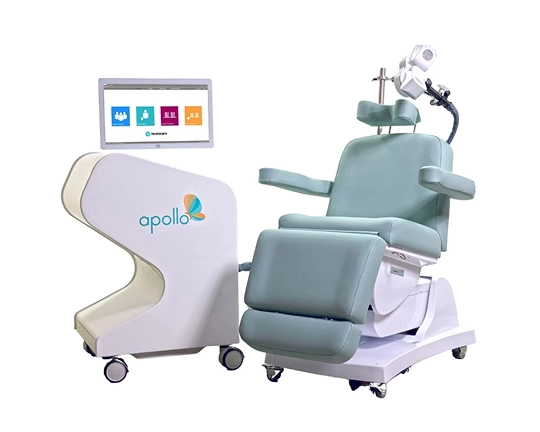
The comfortable chair uses a magnetic coil, or TMS coil, and industry-leading software to generate a magnetic field that painlessly stimulates neurons beneath the skull. The result is deep transcranial magnetic stimulation that’s fully non-invasive. More specifically, the Apollo system has received FDA-clearance for:
  • Major Depressive Disorder (MDD)
  • Treatment-Resistant Depression (TRD)
  • Obsessive Compulsive Disorder (OCD)
  • Migraines
  • Smoking Cessation
While TMS treatments are not specifically approved for Bipolar Disorder, ADHD (Attention-Deficit/Hyperactivity Disorder), sleep disorders, or concussions, they have been shown to help with all of these conditions as well.
Apollo TMS
Apollo TMS Machine

How Apollo TMS Differs from Other Brain Stimulation Treatments

The first thing that sets Apollo TMS apart from other treatments is its non-invasive nature. Unlike vagus nerve stimulation or electroconvulsive therapy (ECT) treatments, Apollo TMS doesn’t require surgery, anesthesia, implants, or recovery time.
Instead, it’s an outpatient procedure performed in a safe, comfortable treatment room. Sit back and relax in the ergonomic chair that stores your unique, personalized settings. Plus, the lack of negative side effects can also be appealing for patients who haven’t responded well to pain medicine or mental health medications in the past.
Compared to other noninvasive brain stimulation treatment options, including Vielight Photobiomodulation (PMD) Therapy, Apollo TMS stands out for its use of magnetic energy, rather than red and near-infrared (NIR) light. However, both are effective depression treatments when standard drug therapy isn’t working, or isn’t enough.

Benefits of The Apollo TMS Therapy System

Ready to start your 20–40-minute session? Here are some of the benefits:

1. Targeted Relief for Depression

Even without deep brain stimulation, Apollo TMS therapy directly impacts parts of the brain associated with mood regulation. This allowed patients to receive response rates of 50% to 60% for severe depression symptoms and other debilitating disorders.

2. Drug-Free and Noninvasive

If you’ve struggled with antidepressant medication, Apollo TMS treatment sessions are both drug-free and noninvasive. Simply sit back and get the effective treatment you need without anesthesia or surgery. If you’ve had a hard time tolerating implanted medical devices, or prefer a less invasive solution, Apollo TMS may be the perfect option.

3. No Systemic Side Effects

Unlike other mental health treatments, including antidepressants, Apollo TMS services don’t cause weight gain, fatigue, or sexual dysfunction. Your 20–40 minutes in the chair comes with no downtime or long-term side effects; most patients only report a mild tapping sensation during treatment.

4. FDA-Cleared for Multiple Conditions

Aside from depression, Apollo TMS is FDA-approved for Obsessive Compulsive Disorder (OCD), migraines, and smoking cessation, with promising research for other psychiatric disorders. This makes it a safe adjunctive treatment for patients managing complex or comorbid conditions.

Get Started Today!

If you want to see the difference Transcranial Magnetic Stimulation can make for your physical and cognitive health, we encourage you to reach out to us today. Our expert team, including our nurse practitioner, is here to provide you with the support and guidance you need to get the most out of your Apollo TMS therapy. Trust our dedicated clinical practice to make your well-being and improved quality of life our top priority.

Apollo TMS: Frequently Asked Questions

Is TMS safe?

Yes. TMS is an FDA-cleared, safe treatment option for depression and other mental health conditions. It does not require anesthesia, does not cause memory loss, and carries no systemic side effects like weight gain or fatigue.

Does Apollo TMS hurt?
No, Apollo TMS shouldn’t hurt. Most patients feel only a light tapping sensation on the scalp during treatment, with any mild discomfort typically decreasing after the first few sessions. We always put the patient’s comfort first, so don’t hesitate to let us know if you have any concerns or requests.
How long does a typical session take?
Sessions generally last 20 to 40 minutes, depending on your personalized treatment plan.
What are the side effects of Apollo TMS?

Because Apollo TMS stimulates specific brain regions, the most common minor side effects include:

  • Mild tapping or tingling at the treatment site
  • Temporary scalp sensitivity
  • Occasional mild headache

These effects are short-lived and typically resolve quickly.

How soon will I notice results?

Some patients start to feel improvements 2–3 weeks after starting Apollo TMS therapy, while others notice changes after a few months. Over time, you should experience a better mood, as well as more energy and focus.

How long do results from Apollo TMS last?
After completing the initial course of treatment, most patients report better mood regulation for 6–12 months. Some individual patients may benefit from maintenance sessions if symptoms begin to return.
Can I continue my current medications during TMS?
Yes. Many patients utilize this advanced technology as an adjunctive treatment, taking their regular medications while undergoing sessions.
Is TMS covered by insurance?
Most insurance providers—including Medicare and Medicaid—cover TMS for treatment-resistant depression. Coverage for other conditions varies. Our office can help verify your benefits and submit all required documentation.
Who is a good candidate for Apollo TMS?
Most patients with treatment-resistant depression or bad experiences with medications can benefit from Apollo TMS therapy. However, TMS is not recommended for people with:

  • Implanted metallic or electronic devices near the head
  • A history of seizures (evaluated case-by-case)
  • Certain neurological conditions

Your clinician can help you determine if a TMS system is right for you.

Can I drive after a TMS session?
Yes. TMS has no cognitive or sedating effects, so you can safely resume normal activities immediately after treatment.

Service Areas

We proudly serve clients locally in Agoura Hills, Ventura, and the surrounding areas. In addition to our in-person services, we offer convenient telehealth and telemedicine options, ensuring you have access to the care you need, no matter where you are. Whether you are near or far, our team is ready to provide the comprehensive behavioral health services you deserve, remotely or in person.

Agoura Hills

Agoura Hills

Westlake Village

Westlake Village

Calabasas

Calabasas

Thousand Oaks

Thousand Oaks

Simi Valley

Simi Valley

Encino

Encino

Camarillo

Camarillo

Malibu

Malibu

Ventura

Ventura

Santa Barbara

Santa Barbara

Santa Paula

Santa Paula

Northridge

Northridge

West Hills

West Hills

Santa Clarita

Santa Clarita

Los Angeles

Los Angeles

Glendale

Glendale

Burbank

Burbank

Pasadena

Pasadena

Chatsworth

Chatsworth

Tarzana

Tarzana

Studio City

Studio City

Canoga Park

Canoga Park

Moorpark

Moorpark

Newbury Park

Newbury Park

Port Hueneme

Port Hueneme

Ojai

Ojai

Woodland Hills

Woodland Hills

Related Services

Contact Us

Skip to content